
Bendy's Nightmare Run
Joey Drew StudiosArcade
4.7612.00 Reviews
- Version
- 2.0.2
- Installs
- 100.00K
- Age Rating
- Teen
Screenshots

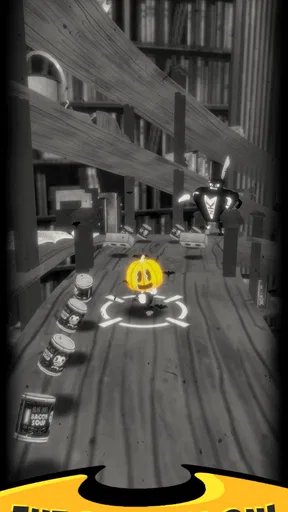
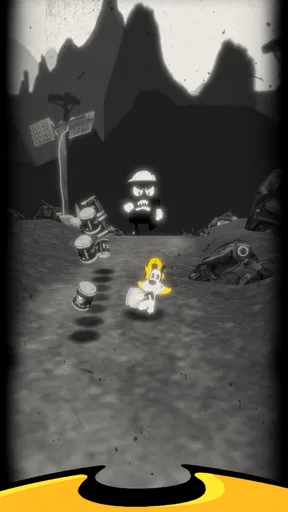



Our Review of Bendy's Nightmare Run
 Analysis by Appyee
I went into Bendy's Nightmare Run expecting a quick cartoon chase, but its appeal comes from how quickly it turns a simple run into a small test of nerve. This is a free arcade game from Joey Drew Studios, built around moving through a hostile Bendy nightmare, avoiding danger, and facing frightening cartoon bosses. The idea is easy to understand within seconds, yet the timing becomes much less forgiving once the screen fills with threats.
What makes it worth discussing is not a complicated progression system or a huge set of modes. It is the repeating action loop: I start running, react to what appears ahead, collect the benefit of surviving and defeating enemies, lose when my timing fails, and immediately feel tempted to try again. That structure makes it a natural fit for short breaks, although players looking for a deep adventure or a relaxed platformer may find it too narrow.
How the run feels from the first tap to the first restart
I’ll use this section to focus on the first minutes: how quickly the controls and threat-reading become clear, and what makes an early mistake feel like a useful lesson rather than a dead end. I’ll also look at the point where the game’s brisk pace starts asking for more attention, before turning to how its challenge develops over repeated runs.
The first action is simple, but the mood is not
The opening moments are deliberately approachable. I do not need a long tutorial to understand the basic situation: keep moving, read the danger in front of me, and make the right response before the nightmare catches up. That directness is one of the game's strongest choices. It gets to the point instead of burying an arcade challenge beneath menus and explanations.
The Bendy setting gives that familiar format a distinctive personality. The cartoon style is not used only for decoration; it makes the danger feel strangely playful and unsettling at the same time. The result is more memorable than an anonymous endless runner because the visual identity gives each attempt a clear tone. I always feel as if I am escaping a particular nightmare rather than simply moving through another obstacle course.
That said, the opening can also reveal the game's limitation. If you prefer games that let you explore, stop to inspect scenery, or choose a slower route, this is not designed around those pleasures. The pressure to keep reacting is the point. I would recommend it first to someone who likes compact arcade challenges, not to a player hoping for a story-heavy Bendy experience.
The feedback rhythm depends on reading danger early
The most satisfying part of a run is the feedback between an action and its result. I see a threat, choose a movement, and immediately learn whether my decision was sound. A successful dodge creates a brief feeling of control, while a mistake usually feels understandable rather than random. That clarity matters in a game built on repetition: I need to believe that a better attempt can succeed because I noticed something sooner or reacted more cleanly.
My most useful adjustment was to stop staring only at the character. The important information is usually arriving ahead of the runner, so I try to scan the route rather than wait for an obstacle to become unavoidable. This sounds obvious, but it changes the whole experience. Players who react at the last possible instant may blame the game for sudden failures, while players who watch the space in front of them can turn the same section into a manageable timing exercise.
The boss encounters give that rhythm a larger shape. Regular hazards test quick recognition, while a terrifying cartoon boss makes the run feel like it has reached a meaningful confrontation. I found it helpful to treat the boss as a sequence of readable moments instead of one long panic. The practical lesson is to preserve attention for the next cue, rather than celebrating a successful move for too long.
There is also a useful trade-off in the game's speed. Fast movement keeps the action exciting and makes even a short session feel active, but it leaves little room for hesitation. This is why the game can be enjoyable on a commute or during a brief wait, yet tiring if I keep replaying the same failed section without changing my approach. The best sessions are focused ones, not necessarily the longest ones.
Reward comes from improvement as much as survival
The immediate reward is the feeling that a dangerous sequence has been handled. Defeating a boss or reaching farther than before gives the attempt a purpose beyond simply staying alive for another moment. I like that the reward is tied to action: I do not feel as if progress happened passively. It comes from recognizing patterns, preserving composure, and making fewer rushed decisions.
Because the game is free, it is easy to try without committing money at the start. Optional in-app purchases range from $0.99 to $29.99 per item, so I would advise deciding in advance whether I am comfortable spending anything. The core appeal should be judged by how satisfying the free play feels, not by assuming that purchases are necessary to make the loop enjoyable.
This is also where the distinction between arcade fun and long-term progression becomes important. I would not choose this game because I want a carefully layered character-building system or a large collection of strategic upgrades. Its reward is more immediate: I survive, I learn, I improve, and I want another attempt. For some players that simplicity is refreshing. For others, it may feel thin after the novelty of the nightmare setting wears off.
A practical way to get more from the reward loop is to set a small personal target before starting. Instead of playing vaguely until I fail, I might focus on reaching one more difficult section, handling a boss cue without panic, or completing a run with fewer careless mistakes. That turns each attempt into a useful experiment and prevents the game from becoming a string of identical restarts.
The reset is fast, which keeps the frustration manageable
Failure is built into the experience, but the reset is what decides whether failure feels motivating or exhausting. Here, the short-session structure makes restarting feel natural. I do not need to recover from a long investment before trying again, so a mistake can become information immediately. I can remember what went wrong and test a different response while the lesson is still fresh.
That quick reset also creates the game's strongest psychological pull. A failed run rarely feels like a complete ending; it feels like an unfinished attempt. I often want one more session because I can identify the moment where my attention slipped. The danger is that this same design can encourage mindless repetition. If I keep tapping restart without changing my timing or scanning habits, I am repeating the error rather than learning from it.
When I play on a phone, I find it better to stop after a few unfocused attempts instead of forcing progress. Arcade games can make a player confuse persistence with improvement. A short pause helps me return with a clearer view of the route and the boss behavior. This is especially useful for younger players or anyone who becomes frustrated by rapid failures, since the Teen content rating signals that the nightmare presentation is not aimed at very young children.
The reset loop is less suitable for people who dislike losing progress repeatedly. If a failed run makes you want a checkpoint, a story save, or a gentler difficulty curve, another kind of mobile game may be a better match. Bendy's Nightmare Run works best when restarting is part of the fun rather than an interruption to it.
Where it fits among arcade alternatives
Compared with a calm puzzle game, this is much more immediate and reflex-driven. Compared with a conventional platformer, it gives me less freedom to pause and plan a route. Its identity sits closer to a focused chase challenge: the screen asks for quick decisions, and the satisfaction comes from making those decisions consistently under pressure.
That focus is an advantage when I have only a few minutes. I can open it, get into the action quickly, and leave after a handful of attempts without needing to remember a complicated plot or rebuild a strategy. It is also a good choice for fans of Bendy's eerie cartoon atmosphere who want something more active than simply browsing the setting.
On the other hand, players who want broad exploration, multiplayer competition, or a deep narrative should look elsewhere. The game is not trying to replace a full adventure. Its value is concentrated in movement, reaction, boss pressure, and repetition. Choosing it over another arcade title makes the most sense if the Bendy presentation and chase structure appeal to you specifically.
Device expectations and practical details
The game is available for Android devices running at least OS 9, which makes it accessible to a wide range of compatible phones. I would still play with a reasonably clear screen and enough battery for repeated attempts, because the experience depends on noticing visual cues quickly. A cramped display or distracting environment can make a timing challenge feel harder than it should.
The current version is 2.0.2, and the game has reached over 100K installs. Its average rating is 4.7 from around 4K ratings, with 612 written reviews. Those figures suggest that the compact arcade format has found a receptive audience, but they do not change the basic question I would ask before installing: do I enjoy repeating a difficult run to improve by small amounts?
I also appreciate that the entry price is free, since it lowers the risk of trying the game for yourself. Still, I would treat the purchase options as a reason to use normal spending discipline, especially if the phone is shared with a younger player. The Teen rating is another useful signal for families: the cartoon look is stylized, but the nightmare and boss-focused presentation may not suit every child.
Who should play, and who should skip it
I think this is a strong fit for someone who enjoys short arcade sessions, recognizable visual themes, and the satisfaction of turning a failed attempt into a better one. It is particularly appealing if you like games where the first few seconds are easy to understand but later decisions demand concentration. The Bendy atmosphere adds enough character to stop the experience from feeling completely generic.
I would also recommend it to players who want a game for small gaps in the day. In a realistic scenario, I might open it while waiting for a friend, complete several attempts, and close it without feeling that I have abandoned a long quest. The quick action and reset structure suit that use better than a role-playing game that requires a longer uninterrupted session.
I would skip it if I need a relaxing game, dislike repeated failure, or want substantial exploration. I would also look for another option if my main interest in Bendy is story and world-building rather than reflex action. The unusual setting can attract the wrong expectations; this is an arcade challenge wearing Bendy's nightmare style, not a replacement for every kind of Bendy experience.
My verdict on the complete action loop
The loop works because every stage leads naturally to the next. The first action is immediate, the feedback tells me whether my timing was good, the reward gives the run meaning, and the reset makes improvement feel close enough to chase. That final temptation is the reason another session begins: I usually believe the next attempt can correct the last mistake.
My main reservation is that the same tight focus can become repetitive. There is no need to pretend that a compact arcade game offers the breadth of a larger mobile adventure. Its success depends on whether the chase, the cartoon horror mood, and the boss pressure remain enjoyable after the first surprise has faded.
For me, Bendy's Nightmare Run is best enjoyed in deliberate bursts. I watch the route ahead, treat each failure as a specific lesson, and stop when my reactions become careless. That approach brings out its strongest quality: the next run feels earned by the last one. If that kind of action-feedback-reset cycle sounds satisfying, this free arcade game is worth trying. If you need a slower pace or a deeper campaign, I would choose a different mobile experience instead.
Verdict
Strengths of Bendy's Nightmare Run
- Fast, responsive controls make dodging obstacles feel satisfying.
- Distinctive 1930s cartoon art gives the runner a memorable visual style.
- Multiple characters add variety and encourage replaying each level.
- Short runs are convenient for quick gaming sessions.
- Offline play makes it suitable for travel or areas with weak internet.
Limitations of Bendy's Nightmare Run
- Repeated obstacle patterns can make later runs feel predictable.
- Some upgrades and objectives require considerable grinding.
- The dark visuals may make certain hazards difficult to spot quickly.
- Progress can feel slow without completing optional challenges.
- Older devices may experience occasional performance issues.
Other Releases by Joey Drew Studios
View All
Bendy and the Ink Machine
Adventure4.5
Similar Picks in This Category
View All
Subway Surfers
SYBO Games4.6

Stickman Party 234 MiniGames
PlayMax Game Studio4.6

Subway Princess Runner
Ivy4.4

Temple Run
Imangi Studios4.2

Zombie Tsunami
Mobigame SAS4.6

Stack Ball - Crash Platforms
CASUAL AZUR GAMES4.5
Frequently Asked Questions
What is Bendy’s Nightmare Run?
Bendy’s Nightmare Run is an endless running game inspired by the classic Bendy and the Ink Machine universe. You control Bendy as he runs through an ink-filled world, dodging obstacles, avoiding enemies, collecting useful items, and trying to survive for as long as possible. Its cartoon-horror presentation, vintage animation style, and fast arcade gameplay make it accessible to casual players while still offering challenging runs.
How do you play Bendy’s Nightmare Run?
The game uses simple touch controls designed for quick sessions. Bendy runs automatically, while you guide him around hazards, jump over obstacles, collect items, and react to enemies appearing along the route. Timing is especially important because the pace gradually becomes more demanding. Completing objectives and surviving longer runs allows you to improve your score and experience more of the game’s themed environments.
Is Bendy’s Nightmare Run free to download?
Bendy’s Nightmare Run has generally been offered as a free-to-download mobile game, although availability, advertising, and optional purchases can depend on the platform and current store version. Before installing, check the official Google Play or App Store listing for the latest pricing information, supported devices, and in-app purchase details. Store policies and regional availability may change over time.
Can Bendy’s Nightmare Run be played offline?
The core running gameplay can usually be enjoyed without a continuous internet connection, which makes the game convenient for short sessions while traveling or when mobile data is unavailable. However, some features may require internet access, including advertisements, store-related content, updates, analytics, or restoring purchases. It is best to launch the game online at least once after installation and verify which functions remain available offline.
Is Bendy’s Nightmare Run suitable for children?
Although Bendy’s Nightmare Run uses a stylized cartoon and vintage-animation appearance, it still includes chase sequences, monsters, threatening imagery, and horror-themed scenes. It may be appropriate for older children depending on their sensitivity to suspense and frightening characters, but parents should review the age rating and store description before downloading. Advertising, purchases, and device permissions should also be checked if children will play independently.
Play our best games!


